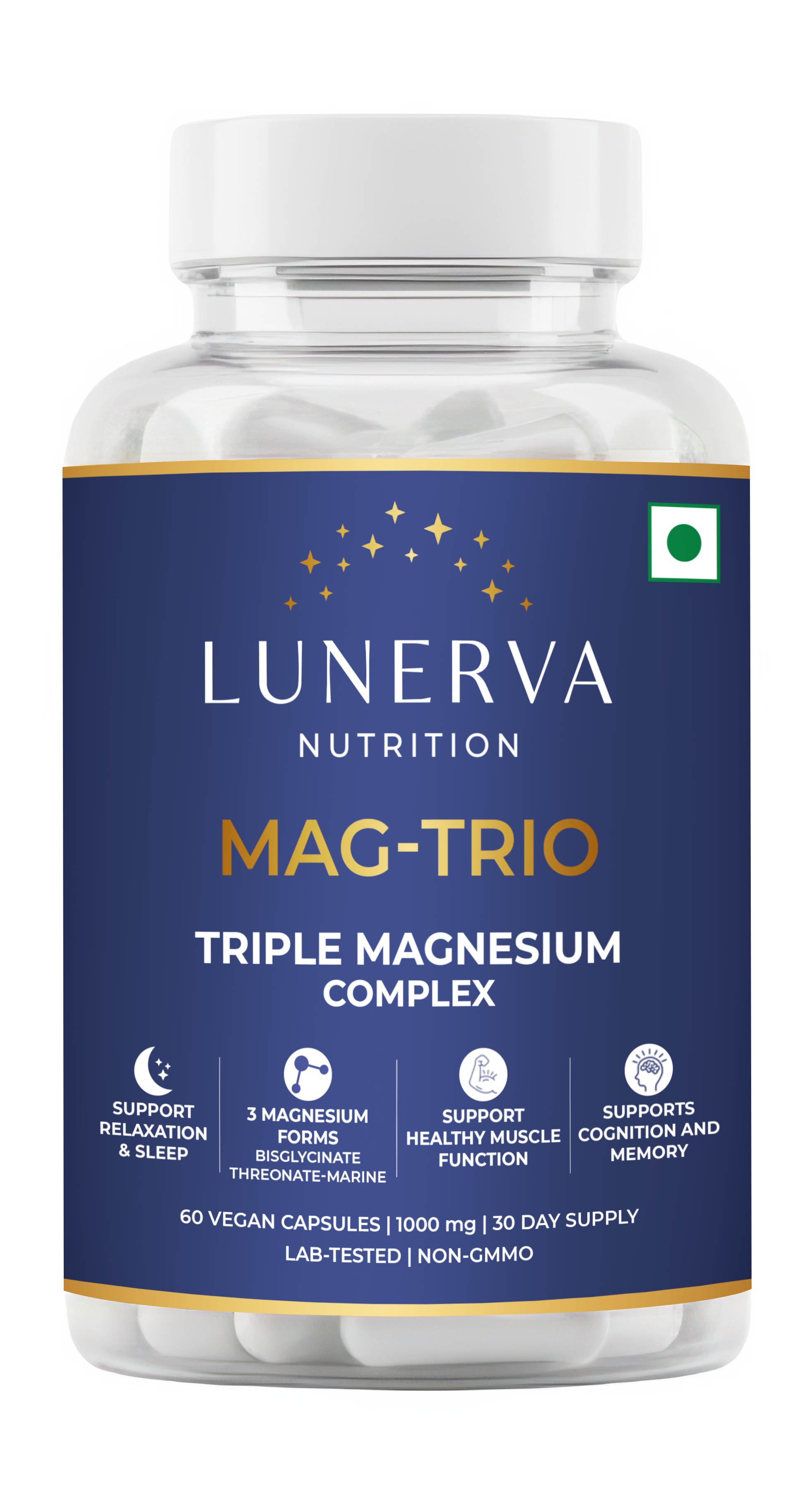
Magnesium Supplements for Women: Why They Are Important
Lunerva Nutrition Team
Wellness Expert • Mag-Trio Nutrition

Magnesium is one of the most essential minerals for overall
health, yet it is also one of the most commonly overlooked nutrients in women’s
nutrition. From supporting hormonal balance and bone health to improving sleep
quality and managing stress, magnesium plays a crucial role in several
physiological processes that directly affect women’s well-being.
Despite its importance, research suggests that many women do
not consume adequate magnesium through their diet. Busy lifestyles, stress,
poor dietary habits, and certain health conditions can further deplete
magnesium levels, increasing the risk of fatigue, muscle cramps, mood
fluctuations, and sleep disturbances.
This is where magnesium supplements for women can play an important role. By helping maintain
optimal magnesium levels, supplements may support hormonal health, strengthen
bones, improve sleep quality, and reduce symptoms associated with premenstrual
syndrome (PMS).
Understanding Magnesium Needs in Women
Magnesium is an essential mineral that supports many
important functions in the body. It supports more than 300 enzymatic reactions,
helping the body perform various functions and maintain healthy clinical
parameters.
Although both men and women need magnesium, women may be
at greater risk of deficiency.
One of the primary causes for this is hormonal fluctuations. Hormonal changes are a constant part of a woman’s life. Starting at puberty, hormone levels fluctuate during each menstrual cycle and continue to change during pregnancy and menopause. These changes can affect magnesium balance in the body.
Other factors that contribute to the risk of magnesium
deficiency in women include:
Changes in Dietary Patterns: In many cases, women
consume less magnesium than the recommended daily intake. This is partly due to
changing dietary habits, where highly processed foods—typically low in
magnesium—have increasingly replaced traditional magnesium-rich foods such as
whole grains, nuts, seeds, and leafy green vegetables.
Increased Physiological Demands at Different Life Stages:
During pregnancy and lactation, the body requires additional nutrients,
including magnesium, for fetal growth, bone development, and proper nerve and
muscle function.
- Certain
Health Conditions: Some health conditions more commonly seen in women
may also be associated with lower magnesium levels. These include
premenstrual syndrome (PMS), osteoporosis, and menopause-related changes
in bone health. In addition, factors such as gastrointestinal disorders
that impair nutrient absorption, long-term use of certain medications, and
aging-related changes in nutrient metabolism that increase magnesium loss
may further contribute to inadequate magnesium status in women.
- Body Composition: Body composition can also influence how magnesium is absorbed and used. For example, differences in body fat, muscle mass, and metabolic activity may affect nutrient requirements and storage.
- Magnesium
and Premenstrual Syndrome (PMS)
Premenstrual syndrome affects a
large proportion of women during their reproductive years. Symptoms can range
from mild discomfort to significant emotional and physical disturbances that
interfere with daily activities.
Research suggests that low
magnesium levels have been associated with increased PMS symptoms.

How Magnesium Helps with PMS
- Mood
stabilization: Magnesium supports serotonin production and nervous
system balance, which help reduce mood swings, anxiety, and irritability.
- Reduction
in water retention: Magnesium helps regulate fluid balance in the
body, potentially reducing bloating and swelling.
- Muscle
relaxation: Magnesium helps relax smooth muscles, which help reduce
menstrual cramps and discomfort.
- Improved
sleep quality: Many women experience sleep disturbances during the
premenstrual phase. Magnesium may help promote relaxation and support
sleep quality.
- Magnesium
and Bone Health
Women are particularly vulnerable to bone loss and
osteoporosis, especially after menopause when estrogen levels decline. Estrogen
plays a protective role in bone metabolism, and its reduction can lead to
accelerated bone mineral loss.
Magnesium supports bone health by:
- Regulating
calcium metabolism
- Supporting
vitamin D activation
- Promoting
bone mineralization and bone density
- Maintaining
structural integrity of bone tissue
- Magnesium
and Sleep Quality
Sleep disturbances are common among women and may be
influenced by hormonal changes, stress, lifestyle factors, and aging. Magnesium
plays a significant role in sleep regulation through its effects on the nervous
system.
How Magnesium Supports Sleep
- Activation
of relaxation pathways: Magnesium supports the activity of
gamma-aminobutyric acid (GABA), a neurotransmitter that promotes calmness
and relaxation.
- Regulation
of melatonin: Magnesium may help regulate melatonin, the hormone
responsible for controlling sleep–wake cycles.
Because of these mechanisms, magnesium supplementation may
help women who experience:
- Difficulty
falling asleep
- Poor
sleep quality
- Restless
sleep
- Nighttime
muscle cramps
Magnesium
and Stress Management
Modern lifestyles expose women to multiple sources of
stress, including professional responsibilities, family commitments, and
emotional demands, which can significantly affect magnesium levels.
During periods of chronic stress, the body excretes more
magnesium through urine, increasing the risk of deficiency.
Magnesium helps regulate the hypothalamic–pituitary–adrenal
(HPA) axis, which controls the body’s stress response. Adequate magnesium may:
- Reduce
nervous system overstimulation
- Improve
resilience to stress
- Support
emotional well-being
- Magnesium
and Hormonal Balance
Magnesium plays an important role in maintaining hormonal
balance by supporting the normal function of several hormone systems in the
body.
- Magnesium
is involved in the conversion of the inactive thyroid hormone (T4) into
its active form (T3). Magnesium also helps activate vitamin D, which is
important for overall thyroid health.
- Magnesium
supports the metabolism and elimination of excess estrogen from the body
thus maintaining a balanced relationship between estrogen and other
minerals, such as calcium.
- Magnesium
also supports the hormonal pathways involved in progesterone production.
Adequate magnesium levels may help maintain regular menstrual cycles and
support hormonal balance during the menstrual cycle.
- Magnesium
During Pregnancy
Pregnancy significantly increases the body’s nutritional
requirements, including the need for magnesium. This essential mineral plays an
important role in supporting both maternal health and the healthy development
of the baby. Adequate magnesium intake during pregnancy helps maintain several
physiological functions that are crucial for a healthy pregnancy.
Potential Benefits of Magnesium during Pregnancy
- Muscle
Function: Magnesium helps regulate muscle activity, including the
muscles of the uterus. Adequate levels may help maintain normal muscle
relaxation and contraction during pregnancy.
- Blood
Pressure Regulation: Magnesium contributes to the regulation of blood
pressure and supports healthy blood vessel function, which is important
for maternal cardiovascular health.
- Foetal
Growth and Development: Magnesium plays a key role in protein
synthesis, cell growth, and tissue development, all of which are essential
for the proper growth and development of the foetus.
- Relief
from Muscle Cramps: Leg cramps are common during pregnancy,
particularly in the later months. Magnesium may help reduce the frequency
and severity of these cramps by supporting muscle relaxation.
- Additional
Benefits for Women
Beyond PMS, bone health, sleep, and stress management,
magnesium offers several other health advantages.
- Energy
Production: Magnesium plays a critical role in ATP production, the
body’s primary energy molecule. Adequate magnesium levels help support
sustained energy and reduce fatigue.
- Heart
Health: Magnesium contributes to cardiovascular health by supporting
normal heart rhythm, blood pressure regulation, and vascular function.
- Blood
Sugar Balance: Magnesium is involved in glucose metabolism and insulin
signaling, making it important for metabolic health.
Why Consider Magnesium Supplementation?
Although magnesium is naturally present in many foods, some
individuals may not obtain sufficient amounts through diet alone. In such
cases, understanding the magnesium supplement benefits becomes important. They
help maintain adequate levels in the body by providing a controlled and
reliable dose, especially when dietary intake is inconsistent or when specific
health needs increase magnesium requirements.
Key Scenarios to Consider Supplementation:
- Premenstrual
Syndrome (PMS): To manage symptoms like cramps, bloating, and
mood swings.
- Sleep
Issues & Anxiety: To promote relaxation and improve sleep
quality.
- Muscle
Tension & Cramps: To alleviate muscle tightness and cramps.
- Chronic
Stress: Stress causes magnesium depletion, requiring higher
intake.
- Menopause/Health
Support: To support bone health and manage postmenopausal
symptoms.
- Dietary
Deficiencies: When dietary intake of whole grains, nuts, and
leafy greens is low.

Tips for Taking Magnesium Supplements
- Take
with food to reduce stomach upset
- Split
doses if higher amounts are needed
- Avoid
combining with certain medications without advice
- Stay
within recommended dose
References:
- Mazza
E, Maurotti S, Ferro Y, Castagna A, Pujia C, Sciacqua A, Pujia A,
Montalcini T. Magnesium: exploring gender differences in its health impact
and dietary intake. Nutrients. 2025;17(13):2226. doi:10.3390/nu17132226.
- Office
of Dietary Supplements, National Institutes of Health. Magnesium: health
professional fact sheet. Bethesda (MD): NIH; [cited 2026 Mar 8]. Available
from: https://ods.od.nih.gov/factsheets/Magnesium-HealthProfessional/
- Harvard
Health Publishing. What you should know about magnesium. Boston (MA):
Harvard Medical School; [cited 2026 Mar 8]. Available from: https://www.health.harvard.edu/staying-healthy/what-you-should-know-about-magnesium
- UCLA
Center for Human Nutrition. Five benefits of magnesium for hormone
balance. Los Angeles (CA): UCLA Health; [cited 2026 Mar 8]. Available
from: https://uclacns.org/five-benefits-of-magnesium-for-hormone-balance/
- Fatima
G, Dzupina A, Alhmadi HB, Magomedova A, Siddiqui Z, Mehdi A, Hadi N.
Magnesium matters: a comprehensive review of its vital role in health and
diseases. Cureus. 2024;16(10):e71392. doi:10.7759/cureus.71392.
- Tonick
S, Muneyyirci-Delale O. Magnesium in women’s health and gynecology. Open J
Obstet Gynecol. 2016;6(5):325-333. doi:10.4236/ojog.2016.65041.
- Barysheva
VO, et al. Female magnesium deficiency and its management: review of
current knowledge. Obstet Gynecol Reprod. [Internet]. [cited 2026 Mar 8].
Available from: https://www.gynecology.su/jour/article/view/2053
- Porri
D, Biesalski HK, Limitone A, Bertuzzo L, Cena H. Effect of magnesium
supplementation on women’s health and well-being. NFS J. 2021;23:30-36.
doi:10.1016/j.nfs.2021.03.003.
- Harvard
Health Publishing. What can magnesium do for you and how much do you need?
Boston (MA): Harvard Medical School; [cited 2026 Mar 8]. Available from: https://www.health.harvard.edu/blog/what-can-magnesium-do-for-you-and-how-much-do-you-need-202506033100
- Healthdirect
Australia. Magnesium. Canberra: Australian Government Department of
Health; [cited 2026 Mar 8]. Available from: https://www.healthdirect.gov.au/magnesium
- Office
of Dietary Supplements, National Institutes of Health. Magnesium
deficiency. Bethesda (MD): NIH; [cited 2026 Mar 8]. Available from: https://ods.od.nih.gov/factsheets/Magnesium-HealthProfessional/
- WebMD.
Magnesium: supplement guide. New York (NY): WebMD LLC; [cited 2026 Mar 8].
Available from: https://www.webmd.com/diet/supplement-guide-magnesium
Ready to Transform Your Wellness?
Experience the power of our doctor-formulated Triple Magnesium. Better sleep, reduced stress, and faster recovery—all in one premium supplement.